As an Amazon Associate, we earn from qualifying purchases. Some links may be affiliate links at no extra cost to you. Although our opinions are based on curated research, we haven't used these products. Articles generated with AI.

How Do I Organize Documents Digitally Vs. Physically?

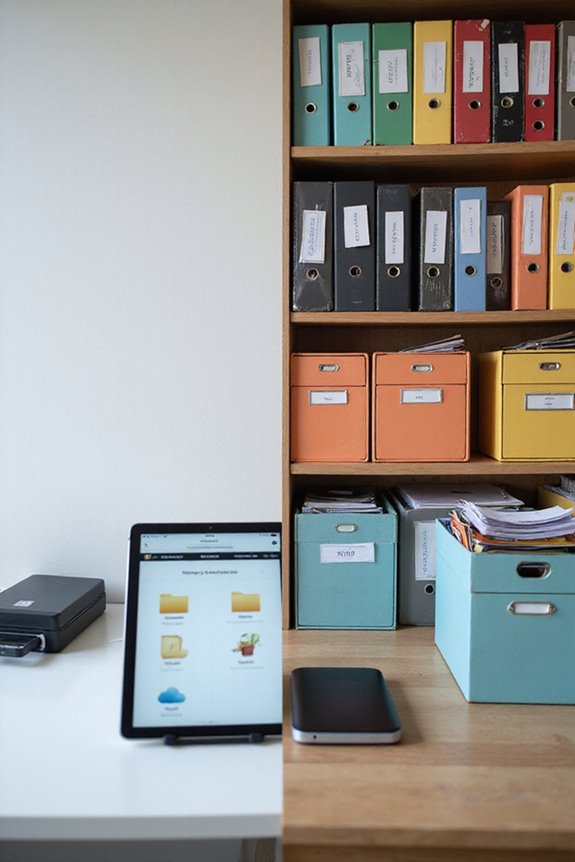
When organizing documents, I recognize the clear distinctions between digital and physical approaches. Digital organization reduces costs, facilitates quick access, and enhances collaboration through cloud storage. In contrast, physical management provides a tangible experience, simplifies version control, and offers straightforward security. Understanding these benefits can help me choose methods that cater to my specific needs. There’s more to explore about how to balance these strategies effectively, ensuring an organized document management system.
Key Takeaways
- For digital organization, utilize cloud storage with indexing for quick access and efficient document management.
- Physical documents benefit from clear labeling and visual tracking to streamline workflow and version control.
- Automate digital processes for collaboration, while maintaining physical copies in secure, locked storage for safety.
- Regularly review and purge outdated digital files, whereas physical documents require proper care for long-term preservation.
- Ensure compliance and security through access control measures for both digital and physical document management systems.
The Benefits of Digital Document Organization
You may be interested



When considering the change from physical to digital document organization, it’s important to recognize the numerous advantages that come with this alteration. First, digital document management considerably reduces costs related to printing and labor, as there’s no need for paper or ink. I also appreciate how cloud storage and document indexing allow for quick access and efficient organization. This setup minimizes time spent searching for files, enabling me to focus on more critical tasks. Furthermore, the reduced reliance on physical storage frees up valuable office space. I’ve found that automating document processes not only cuts operational costs but also enhances productivity, allowing for better collaboration across teams. Overall, moving to digital is a smart move for any organization.
Recommended Products

OUR MOST ADVANCED SCANSNAP. Large touchscreen, fast 45ppm double-sided scanning, 100-sheet document feeder, Wi-Fi and USB connectivity, automatic optimizations, and support for cloud services. Upgraded replacement for the discontinued iX1600

Scanner type: Document

PORTABLE SCANNER FOR USE ON-THE-GO — The fastest and lightest mobile single-sheet-fed compact document scanner in its class¹
The Advantages of Physical Document Management
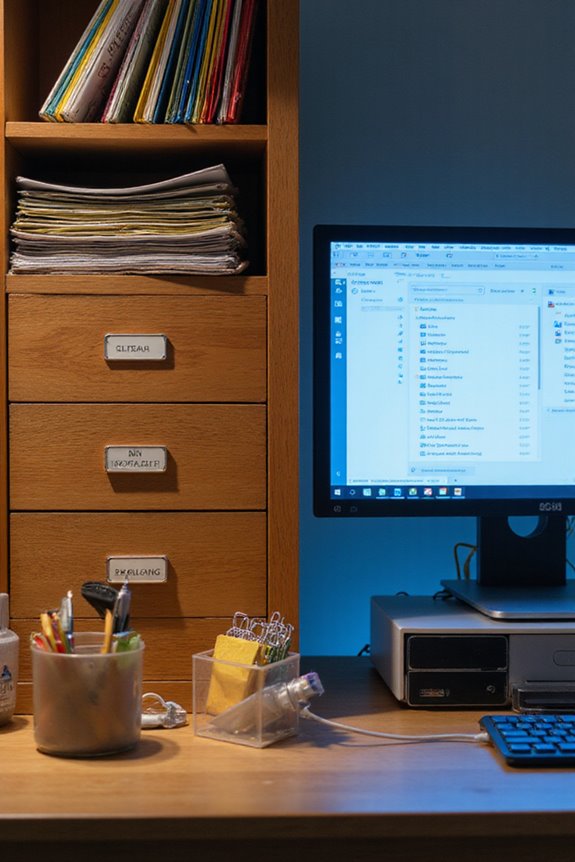
While digital document organization offers numerous benefits, physical document management still holds significant advantages that shouldn’t be overlooked. One key advantage is the tactile experience that physical documents provide. Many people find it easier to engage with a hard copy, allowing for more intuitive interaction. Furthermore, visual tracking of physical documents can enhance workflow, as you can quickly scan through files without needing a screen.
Physical documents also allow for straightforward version control; changes are visible, reducing confusion. Security can be easily managed through locks and secure storage areas. Finally, long-term preservation is possible with proper care, ensuring that important documents remain intact for legal and compliance purposes. In these ways, physical document management retains its value in a digital world.
Comparing Cost Efficiency: Digital vs. Physical

Although the choice between digital and physical document management often hinges on personal preference, cost efficiency plays an essential role in the decision-making process. From my experience, digital investments yield significant long-term savings compared to physical limitations. For instance, printing costs can be substantial, especially with high volumes, while digital documents eliminate many of these expenses. Additionally, cloud storage offers a scalable and cost-effective solution, reducing the need for costly physical storage space. Regular maintenance of physical systems can add up, whereas digital solutions streamline workflows and minimize errors, ultimately increasing productivity. In the long run, shifting to a digital system not only saves money but also optimizes resources, making it a strategic choice for efficient document management.
Recommended Products

Expanding file folder in Black with flap and cord closure for organizing and securing 8.5 x 11-inch letter-size documents

Store (Family) Papers Safe & Sound: Keep all your essential papers safely in one spot with ZICOTOs’ important document organizer. Swiftly locate anything from legal to medical papers for the whole family. Ditch the paper chaos, embrace order & enjoy the simplicity with the Zicoto expanding file folder

fireproof Waterproof : This upgraded fireproof bag for documents is constructed primarily of fire-resistant, heat-insulating functional materials that can withstand ultra-high temperatures. Meantime, the Sealed zippers are totally waterproof which can survive the spray of firefighter's hose on full blast, provides security seal and maximum protection for your documents
Enhancing Accessibility and Collaboration

As we navigate the shift from physical to digital document management, it’s essential to recognize how digital solutions greatly enhance both accessibility and collaboration. Digital documents can be designed with accessibility in mind by following the Web Content Accessibility Guidelines (WCAG) and using clear headings and descriptive links. This guarantees that everyone, including those with disabilities, can access the content.
Collaborative tools, like cloud storage platforms, allow real-time editing and sharing, making it easier to maintain accessibility features across documents. Additionally, automated tools like WAVE can identify accessibility issues, helping to guarantee compliance. By leveraging these digital solutions, we can create an inclusive environment that promotes productivity and effective teamwork, ultimately enhancing the overall document management process.
Security Considerations for Digital and Physical Documents

In the domain of document management, the security of both digital and physical documents warrants careful consideration. Effective access control is fundamental; for digital documents, I utilize authentication methods like multi-factor authentication and role-based access control. For physical documents, I guarantee that only authorized personnel have access to locked storage areas.
Data encryption plays an imperative role in protecting sensitive information. I encrypt digital files at rest and in transit while using tamper-evident packaging for physical documents.
Maintaining audit trails is essential; I log all access for digital documents and keep sign-in logs for physical ones. Finally, I adhere to compliance policies, confirming my practices meet industry regulations, which helps in effective risk management and safeguarding against potential threats.
Recommended Products

Fireproof and water-resistant: Fireproof lock box is made of double layered non-itchy silicone coated fiberglass which stands up the temperature up to 2000℉.It has passed the UL94 -V0/5VA flame retardant test.Fireproof file box is not only fireproof but also high water resistant in case it gets wet for any reason.Nothing is completely foolproof, but added protection is always a good idea.

【Small Capacity Letter file box】 Compared with other file boxes, our file boxes are more cost-effective and can meet all your storage needs. Including 1 passport mesh bags, 10 card slots, 4 outer pockets and 1 large pocket. They are ideal for storing cards, passports, CDs, USB, photo albums, birth certificates and other valuables. The lower level can store letter sized documents or anything you want (clothes, books, toys). The PP board with better quality increases the load bearing of the box.

UL-94 VTM-0 Certified Fireproof Document Box - The fireproof document box is constructed with 0.8mm premium fire-retardant, non-irritating silicone-coated fiberglass that resists fire and has passed UL-94 VTM-0 flammability testing.
The Role of Automation in Document Management
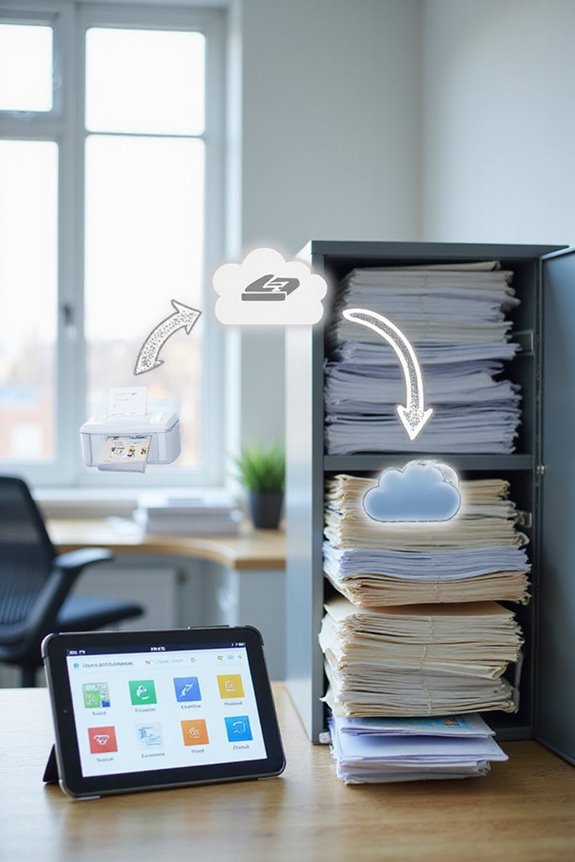
While many businesses still rely on traditional methods for managing documents, the shift towards automation has become increasingly vital for enhancing efficiency and productivity. Automation trends show that 77% of businesses are adopting document management software, integrating automation technologies to streamline operations. With AI integration, tasks such as sorting, tagging, and filing are now automated, allowing for improved data accuracy and reduced manual errors.
Moreover, AI-driven automation can classify documents based on content, making retrieval faster and easier. As the document management systems market is projected to reach $24.91 billion by 2032, investing in automation not only saves costs but also supports real-time collaboration. Embracing these advancements is essential for businesses aiming to thrive in today’s competitive landscape.
Recommended Products
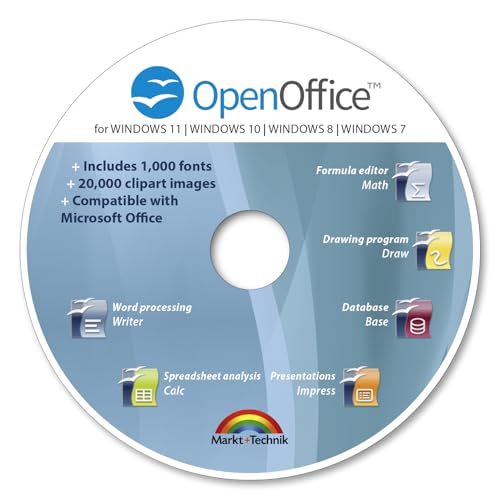
THE ALTERNATIVE: The Office Suite Package is the perfect alternative to MS Office. It offers you word processing as well as spreadsheet analysis and the creation of presentations.


Best Practices for Organizing Documents in Both Formats
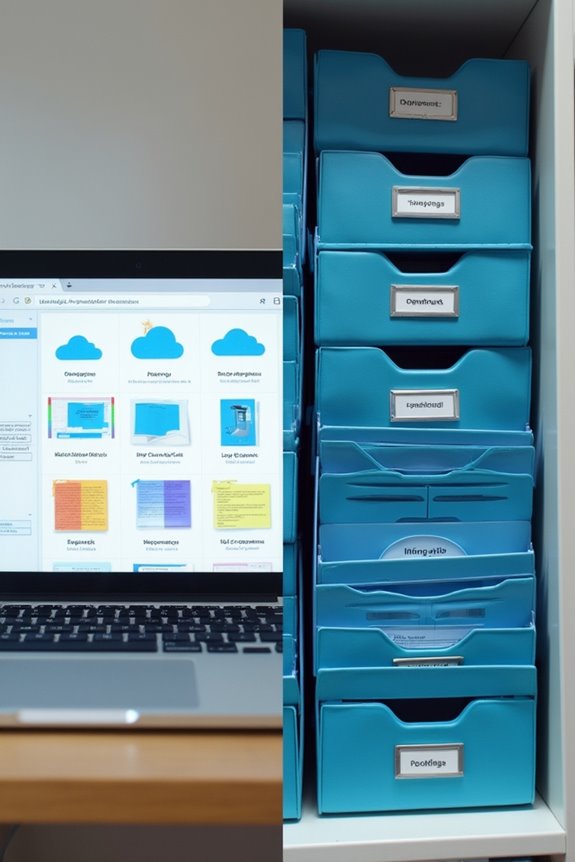
Organizing documents effectively is essential for both digital and physical formats, especially when considering efficiency and accessibility. Here are best practices to follow.
- File Naming: Use a consistent naming system that includes dates, project names, and version numbers for quick retrieval.
- Document Categorization: Organize files into clear categories or folders to streamline access, both digitally and physically.
- Metadata Management: Keep document metadata updated, making searches more efficient.
- Version Control: Implement version control tools to track changes and maintain an audit trail.
- Indexing Strategies: Create a centralized index for locating documents easily.
- Access Controls: Guarantee sensitive documents are protected in both formats with appropriate access controls.
- Collaboration Tools: Utilize digital tools for real-time sharing and editing to enhance teamwork.
Recommended Products

25 letter-size hanging file folders in Green; ideal for 8-1/2 x 11-inch documents

Superior Durability: Featuring strong 100C thickened cover and reinforced edges, surpassing competitors in durability. Made from PVC-free, acid-free materials, ensuring secure organization of bills and documents while delivering unparalleled durability and reliability

Get Organization in Style: This elegant folder with attractive color schemes definitely adds a pop to your workspace! Go for our folder with pleasant colors to brighten up your space and give a little flare to your life.
Frequently Asked Questions
What Tools Are Recommended for Digital Document Organization?
For digital document organization, I recommend using cloud storage services like Google Drive, combined with document tagging for easy retrieval. This approach keeps my files organized and accessible anytime, streamlining my workflow considerably.
How Do I Convert Physical Documents to Digital Format?
Turning mountains of paper into digital treasures is exhilarating! I use scanning techniques like OCR for editable text and save in various file formats, making everything accessible and organized, all while breathing life into my workspace!
What Are the Common Challenges in Digital Organization?
I’ve noticed common challenges in digital organization, like digital clutter and accessibility issues. It’s frustrating when I can’t find documents quickly, and the overwhelming amount of data often makes effective organization feel impossible.
How Can I Ensure My Digital Documents Are Preserved Long-Term?
To preserve my digital documents long-term, I prioritize reliable file formats and guarantee regular digital backups. It’s essential to stay ahead of obsolescence, maintaining access as technology evolves. My strategy’s all about proactive management!
What Legal Requirements Exist for Storing Physical Documents?
When it comes to legal retention for physical storage, I’ve learned it’s essential to keep documents securely for specific durations. Failing to do so could lead to penalties or issues during audits or legal proceedings.
{
“@context”: “https://schema.org”,
“@type”: “FAQPage”,
“mainEntity”: [
{
“@type”: “Question”,
“name”: “What Tools Are Recommended for Digital Document Organization?”,
“acceptedAnswer”: {
“@type”: “Answer”,
“text”: “For digital document organization, I recommend using cloud storage services like Google Drive, combined with document tagging for easy retrieval. This approach keeps my files organized and accessible anytime, streamlining my workflow considerably.”
}
},
{
“@type”: “Question”,
“name”: “How Do I Convert Physical Documents to Digital Format?”,
“acceptedAnswer”: {
“@type”: “Answer”,
“text”: “Turning mountains of paper into digital treasures is exhilarating! I use scanning techniques like OCR for editable text and save in various file formats, making everything accessible and organized, all while breathing life into my workspace!”
}
},
{
“@type”: “Question”,
“name”: “What Are the Common Challenges in Digital Organization?”,
“acceptedAnswer”: {
“@type”: “Answer”,
“text”: “I’ve noticed common challenges in digital organization, like digital clutter and accessibility issues. It’s frustrating when I can’t find documents quickly, and the overwhelming amount of data often makes effective organization feel impossible.”
}
},
{
“@type”: “Question”,
“name”: “How Can I Ensure My Digital Documents Are Preserved Long-Term?”,
“acceptedAnswer”: {
“@type”: “Answer”,
“text”: “To preserve my digital documents long-term, I prioritize reliable file formats and guarantee regular digital backups. It’s essential to stay ahead of obsolescence, maintaining access as technology evolves. My strategy’s all about proactive management!”
}
},
{
“@type”: “Question”,
“name”: “What Legal Requirements Exist for Storing Physical Documents?”,
“acceptedAnswer”: {
“@type”: “Answer”,
“text”: “When it comes to legal retention for physical storage, I’ve learned it’s essential to keep documents securely for specific durations. Failing to do so could lead to penalties or issues during audits or legal proceedings.”
}
}
]
}