As an Amazon Associate, we earn from qualifying purchases. Some links may be affiliate links at no extra cost to you. Although our opinions are based on curated research, we haven't used these products. Articles generated with AI.

How Do I Set Up A Home Office For Video Editing?

To set up a home office for video editing, I focus on creating an ergonomic workspace with an adjustable standing desk and an ergonomic chair for comfort. I choose high-performance hardware like an Intel Core i9 processor, at least 16 GB of RAM, and an NVMe SSD for fast data access. Ensuring display accuracy is essential, so I select a high-resolution monitor and calibrate it regularly. With the right audio devices, I’m ready to optimize my workflow. There’s much more to take into account.
Key Takeaways
- Choose an ergonomic workspace with an adjustable standing desk and a comfortable chair to promote good posture during long editing sessions.
- Invest in high-performance hardware, including a powerful processor, ample RAM, and a dedicated graphics card for optimal video editing performance.
- Use a high-resolution monitor with accurate color reproduction and calibrate it regularly to ensure color consistency in your projects.
- Set up quality audio equipment, including an audio interface and studio monitors, to enhance sound quality in your video edits.
- Organize your workspace with effective cable management and proper lighting to minimize distractions and improve focus during editing tasks.
Choosing the Right Workspace
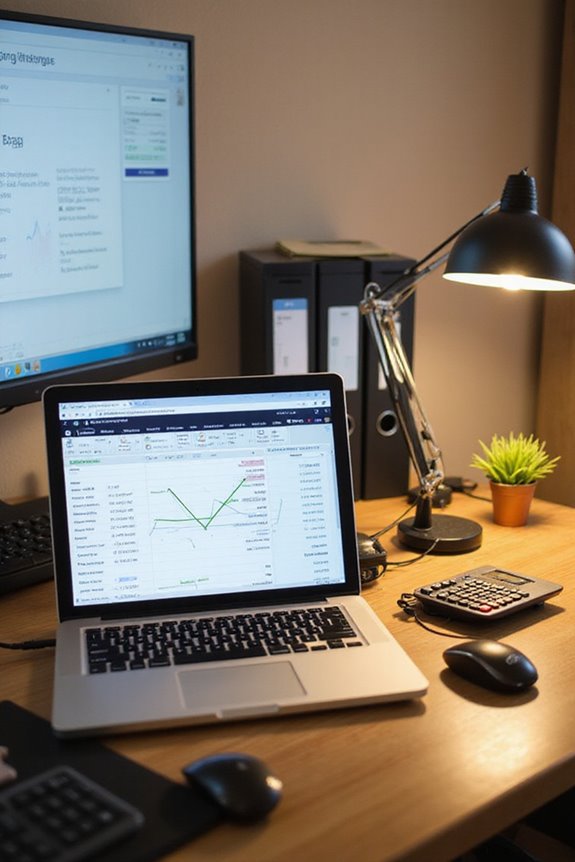
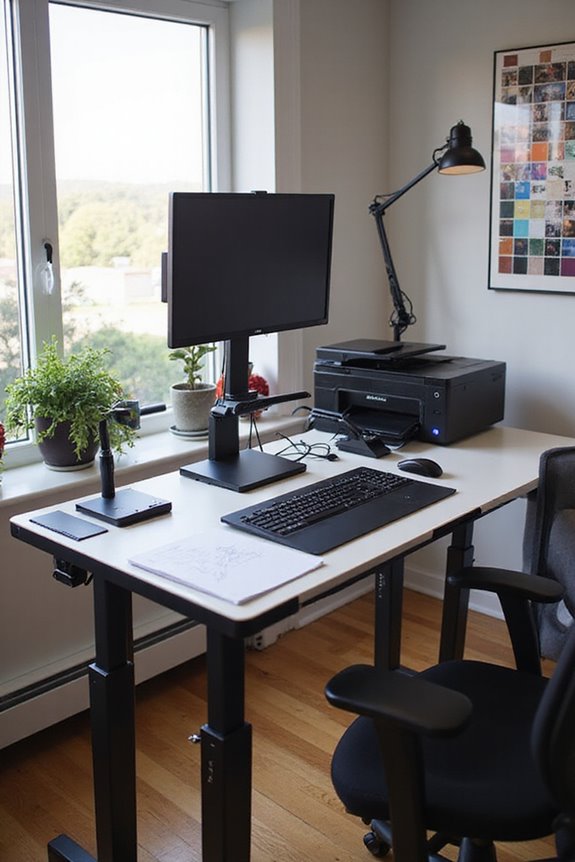
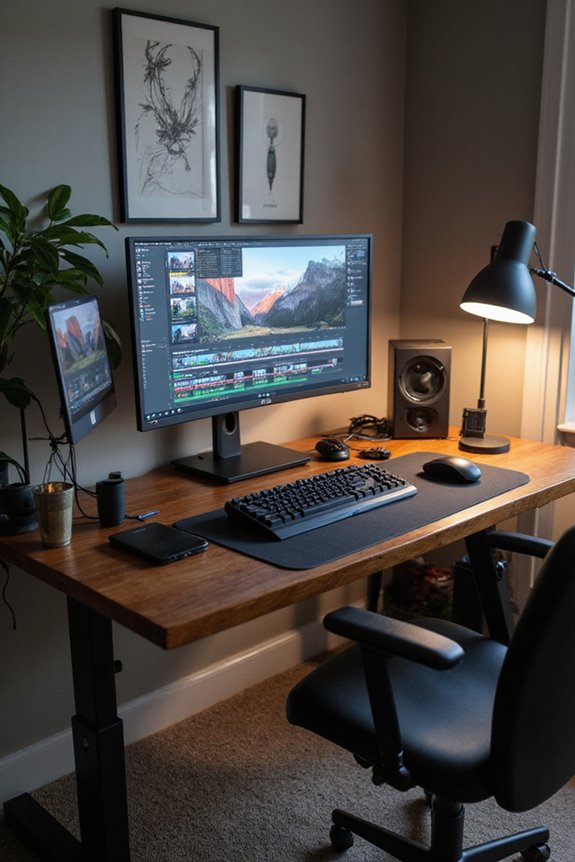
When setting up a home office for video editing, it’s vital to evaluate several factors that can greatly impact your efficiency and comfort. First, consider workspace ergonomics. An adjustable standing desk can help maintain good posture, while an ergonomic chair supports those long editing sessions. Proper lighting, like LED bulbs, minimizes eye strain.
Next, focus on layout optimization. Position your monitors so you can gaze slightly downward, and keep your keyboard and mouse within easy reach to avoid unnecessary strain. Make sure you have enough space for all your equipment and that essential utilities, like power outlets, are accessible. A clutter-free environment not only aids focus but also enhances your workflow, making it easier to tackle your editing tasks effectively. Incorporating adjustable height desks into your setup can further promote comfort and productivity throughout your editing sessions.
Recommended Products

Electric Height Adjustable Standing Desk for Comfortable Work - Switch effortlessly between sitting and standing with this electric standing desk. The smooth height adjustment from 28.35" to 46.46" helps promote a more comfortable working posture and keeps your energy flowing throughout the workday. Ideal for home offices, gaming setups, and productivity workspaces.

【32” x 19” Perfect for Small Spaces & Corner】 Specially designed with a compact 32" x 19" desktop, this small electric standing desk seamlessly fits into limited areas like apartments, bedrooms, and cozy home office corners without crowding your room. It is the ultimate space-saving, height-adjustable solution to pair with under-desk treadmills and walking pads for remote workers, freelancers, and students

Outstanding Stability: This electric standing desk has a sturdy solid steel frame with aerospace-grade lifting column connectors (still stable & secure after testing 100,031 times). It's a firm foundation for work, even at full height
Essential Hardware for Video Editing
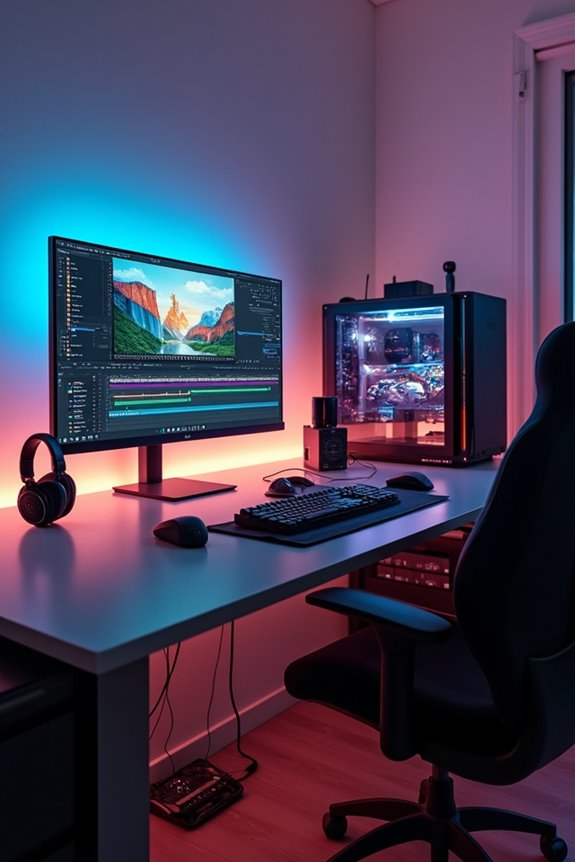
Having the right hardware is essential for video editing, as it directly influences your efficiency and the quality of your final product. Start with a high-performance processor, like an Intel Core i9 or AMD Ryzen 9, to handle demanding tasks. For smooth operation, I recommend at least 16 GB of RAM, but 32 GB is better for heavier projects.
When it comes to storage solutions, opt for fast NVMe SSDs to guarantee quick data access. A dedicated graphics card, such as NVIDIA GeForce or AMD Radeon, will enhance rendering speeds and allow for real-time previews. These components form the backbone of an efficient video editing setup, assuring you can work effectively and produce high-quality content.
Recommended Products

Built for Streamers - When you’re live, every second counts. This under-desk stand keeps your deck within arm’s reach, performing like a premium piece of gaming equipment that never slows you down. A must-have!

【Easy to Install】No drilling required and no damage to your desk. Litwaro clamp on desk organizer features a simple clip, you just turn the knob to fix it on the edge of your desk. And the practical design of silicone pads and rounded corners can directly prevent your laptop from being scratched.

【High Quality Material】This metal side hanging desk organizer is crafted from high quality iron. This sturdy under-desk laptop holder supports up to 22lbs and can be paired with magnetic cable holders, USB hubs, and other devices.
Ensuring Display and Color Accuracy
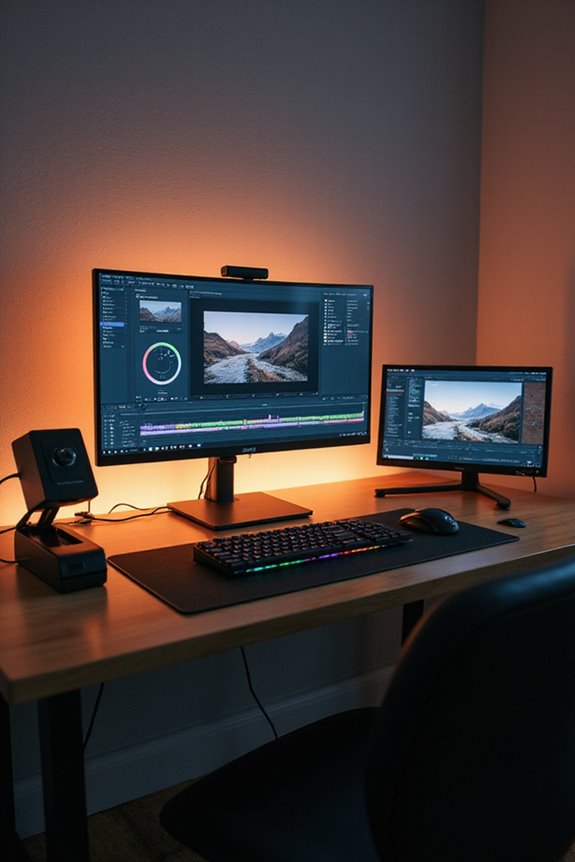
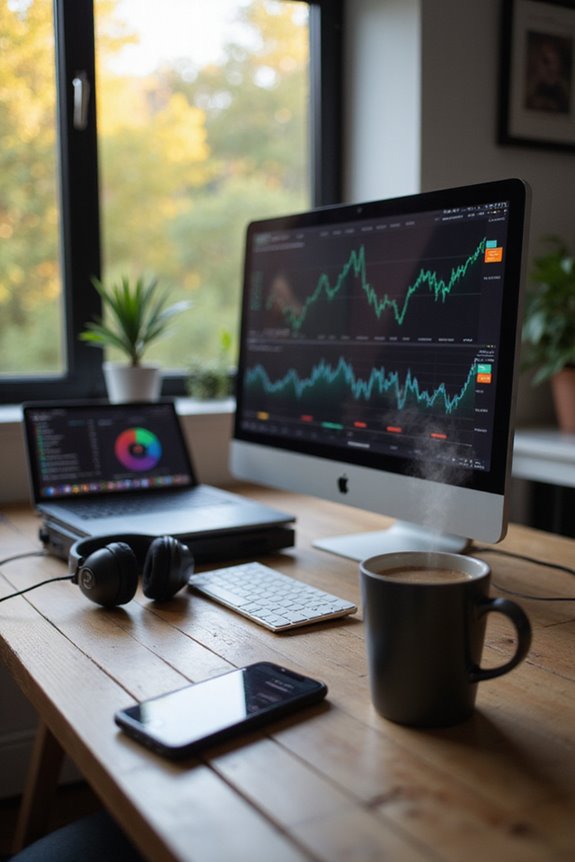
One essential element in video editing is ensuring your display’s color accuracy, which can greatly impact your editing decisions and the final product’s quality. To achieve this, I recommend selecting a high-resolution monitor with an IPS panel for superior color representation. Look for monitor specifications that guarantee 100% coverage of color spaces like Rec. 709 or Adobe RGB. Regular color calibration is vital; using a colorimeter and calibration software helps maintain accuracy over time. Aim for a Delta E value below 3 to keep color deviation imperceptible. Additionally, establish a controlled lighting environment to optimize calibration results, ensuring your workspace supports consistent and true-to-life colors for precise editing. Consider a monitor that offers 99% sRGB color gamut to enhance color vibrancy and accuracy in your projects.
Recommended Products

SUPERIOR ACCURACY - Ensures precise color calibration with two 5x7" DKK charts, providing a reliable reference for consistent image quality across all your video projects.

SPECIFICATIONS: Monitor calibration colorimeter with Easy 1 2 3 software workflow, USB C connection, compact body approx. 34mm tall x 37mm diameter, adjustable counterweight for screen placement, supports up to 2 displays, brightness target selection including Native or Photo with before and after check.
Selecting Audio and Input Devices
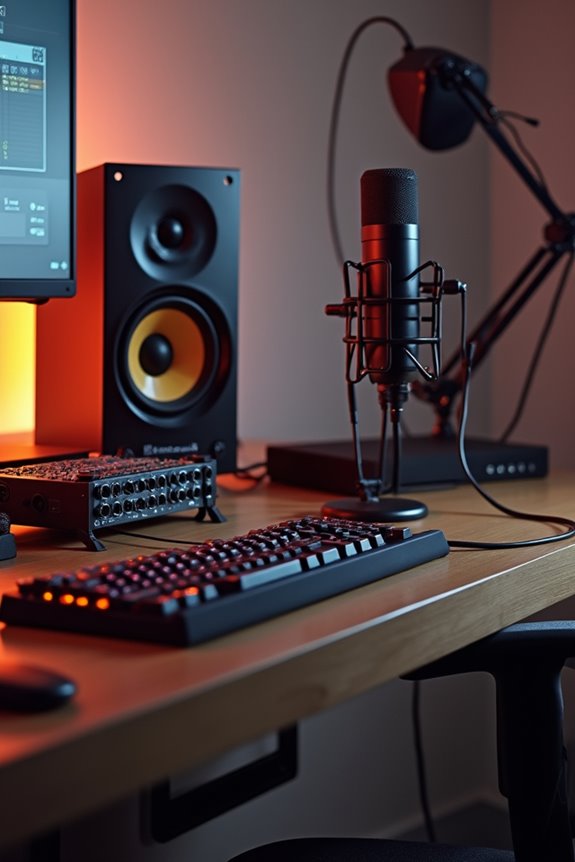
How do you create an effective audio setup for video editing at home? First, consider your audio interface options. Devices like the Focusrite TI2 and Moto M4 connect easily via USB, providing flexibility for your audio needs. Next, choose quality studio monitors; I recommend the KRK Rokit Series for affordability or the Yamaha HS Series for accuracy.
Don’t overlook microphone selection. The LCT 440 PURE offers excellent sound quality and comes with essential microphone accessories like a shock mount and pop filter. Also, invest in ergonomic input devices such as keyboards and mice to enhance comfort during long editing sessions. With these tools in place, you’ll be set for quality audio production in your home office.
Necessary Peripheral and Software Tools
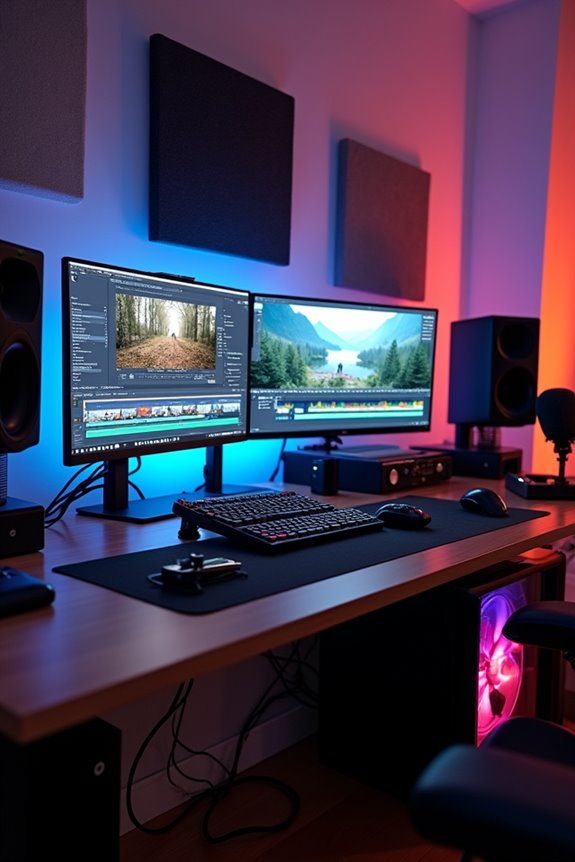
When setting up a home office for video editing, selecting the right peripheral and software tools is essential for optimizing your workflow. For peripheral selection, I recommend investing in an external hard drive for large file storage and backup, along with high-resolution monitors to enhance productivity. A graphics tablet can also facilitate precise editing. Additionally, consider using an external hard drive that offers 256-bit AES encryption for added security of your files.
In terms of software integration, programs like Adobe Premiere Pro and DaVinci Resolve are excellent choices for editing. CyberLink PowerDirector and Wondershare Filmora offer user-friendly interfaces, while Pinnacle Studio provides advanced features. Additionally, make sure your system has a powerful CPU, dedicated GPU, and ample RAM for smooth performance. This combination of tools will greatly improve your editing experience.
Optimizing Your Environment and Workflow
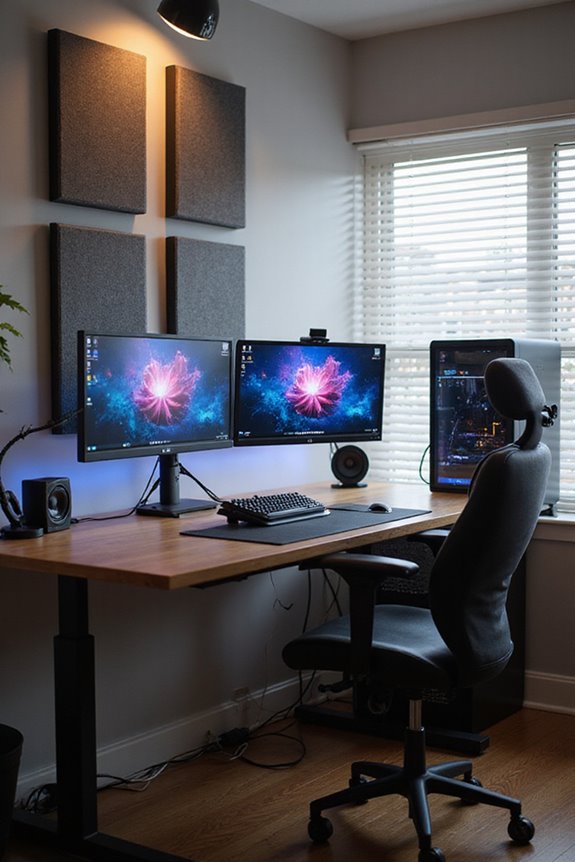
Optimizing your environment and workflow is crucial for achieving efficiency and quality in video editing. Start with workspace ergonomics; using an adjustable desk and an ergonomic chair can greatly enhance comfort during long sessions. Position your primary monitor at eye level and about an arm’s length away to avoid neck and eye strain.
Next, consider lighting techniques. It’s essential to avoid harsh overhead lights; instead, opt for LED adjustable lights or softboxes that minimize glare. Position ambient lighting behind or beside your monitors to balance illumination. Dimmable lighting solutions allow for adjustments based on editing tasks, helping maintain accurate color perception. Incorporating eye-caring features in your lighting options will further protect your vision during extended editing sessions. By focusing on these aspects, you can create a productive and comfortable editing environment.
Maintaining Organization and Comfort
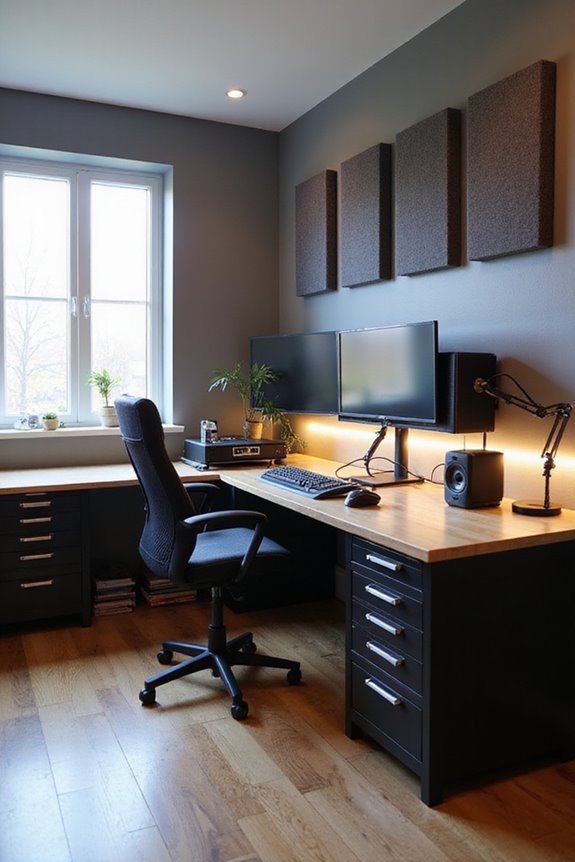
Maintaining organization and comfort in your home office is vital for effective video editing. To start, make sure you have a spacious desk area for your equipment and invest in ergonomic furniture. An ergonomic chair and desk can greatly reduce strain during long sessions.
Cable management is also important; using cable ties or management systems keeps your workspace tidy and prevents distractions. Consider adding shelves or storage units for your supplies, making everything easily accessible.
Proper lighting and temperature control enhance comfort, while using task prioritization tools like planners can help you manage your workload efficiently. Additionally, investing in a gaming desk with multiple storage solutions can further streamline your setup. Finally, designating a break area encourages relaxation and boosts productivity, making sure you maintain focus and comfort throughout your editing tasks.
Frequently Asked Questions
How Can I Improve My Video Editing Skills at Home?
When I first started editing, it felt like learning to ride a bike. I’d practice techniques daily, experimenting with editing software until I found my rhythm. Consistent practice truly turns clumsy cuts into smooth edits.
What Are the Best Online Resources for Video Editing Tutorials?
When I’m looking for video editing tutorials, I love online courses from platforms like Coursera and Udemy. YouTube tutorial websites and various video resources help me enhance my skills effectively and keep me inspired.
How Do I Stay Motivated While Working From Home?
Staying motivated while working from home feels like climbing Mount Everest some days! I tackle it through goal setting and daily routines, planning clear objectives and breaks to keep my energy high and focus sharp.
What Types of Accessories Enhance My Video Editing Experience?
To enhance my video editing experience, I prioritize an ergonomic chair for comfort and monitor calibration tools for color accuracy. These accessories greatly improve my editing sessions by reducing strain and ensuring precise visuals.
How Can I Manage Distractions in My Home Office?
Managing distractions in my home office means creating a distraction-free environment. I use time management techniques like setting clear work hours, taking scheduled breaks, and minimizing noise to stay focused and productive during my editing sessions.