As an Amazon Associate, we earn from qualifying purchases. Some links may be affiliate links at no extra cost to you. Although our opinions are based on curated research, we haven't used these products. Articles generated with AI.

How Do I Set Up An Ergonomic Workstation?

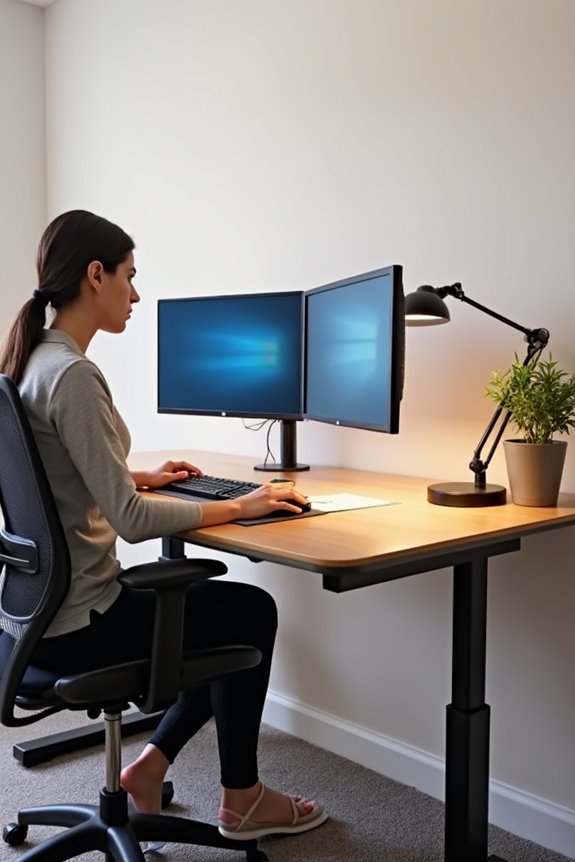
To set up an ergonomic workstation, I start by adjusting my chair’s height, ensuring my feet rest flat on the floor and my knees form a 90-degree angle. Then, I position my desk so my elbows are at a 90-degree angle when typing. I set my monitor at eye level, about 20-26 inches away. Finally, I keep my keyboard and mouse within easy reach to minimize strain. For more detailed tips to enhance comfort, keep exploring.
Key Takeaways
- Adjust your chair height so feet are flat on the floor and knees are at a 90-degree angle.
- Position your desk so elbows rest at a 90-degree angle while typing, allowing for comfortable arm movement.
- Set monitor height so the top is at or slightly below eye level, maintaining a distance of 50-65 cm.
- Keep your keyboard and mouse at elbow height to reduce shoulder strain and maintain a neutral wrist position.
- Ensure adequate lighting of 300-500 lux and minimize glare from screens for reduced eye strain.
Adjusting Your Ergonomic Chair
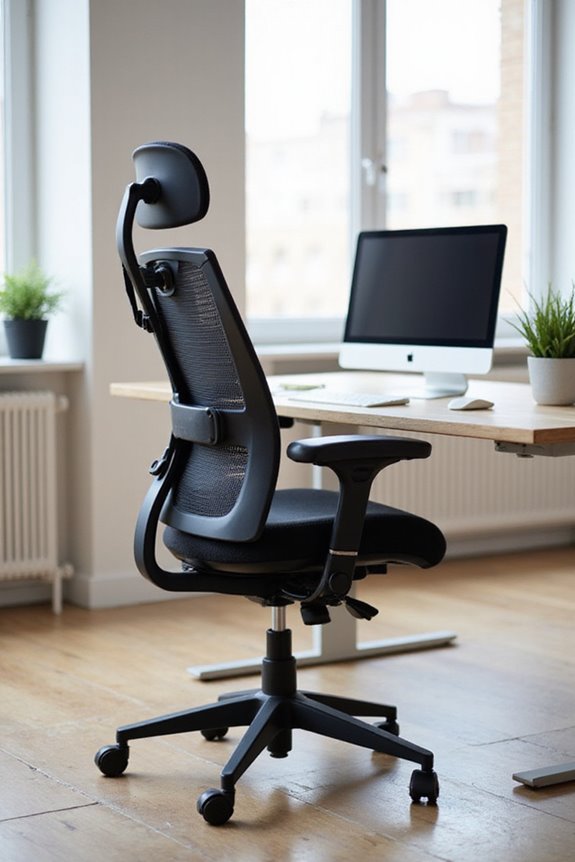
Setting up your ergonomic chair correctly is vital for maintaining comfort and promoting good posture during long hours of work. First, I adjust the seat height so my feet are flat on the floor and my knees form a 90-degree angle. Next, I make sure my thighs are parallel to the floor, which is important for proper posture alignment. If my feet don’t reach the floor, I use a footrest.
I then tweak the seat depth, allowing a 2 to 3 finger gap between the back of my knees and the seat pan. Finally, I adjust the backrest to fit the natural curve of my lumbar spine. Adjustable lumbar support is crucial for reducing lower back discomfort during prolonged sitting. Each step in this chair customization process supports my overall comfort and promotes better posture.
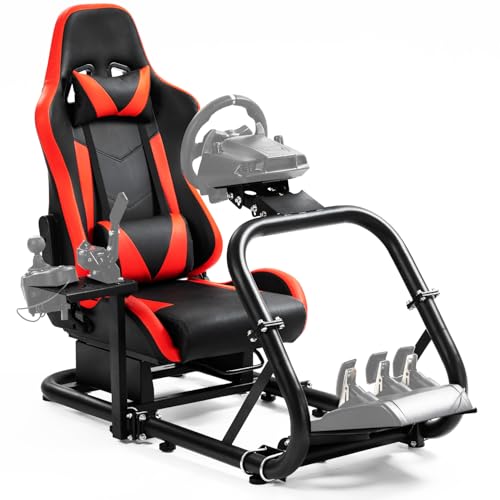
【Stable and Sturdy】The racing simulator cockpit adopts 50*50mm large round tube design, four holes flange can securely fix the racing bracket, providing four times stability, sturdy and sturdy

Modular Design:The racing simulator cockpit has a modular structure, allowing easy adjustment and assembly of parts. The steering wheel, pedals, and shifter can be adjusted flexibly for a personalized driving experience
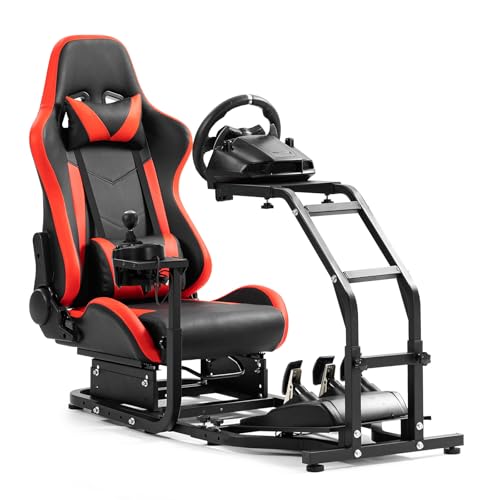
【Wide Compatibility】The racing gaming steering wheel stand mount fit for Logitech G25 G27 G920 G923, for Thrustmaster T300rs T300 T248
Positioning Your Desk Correctly
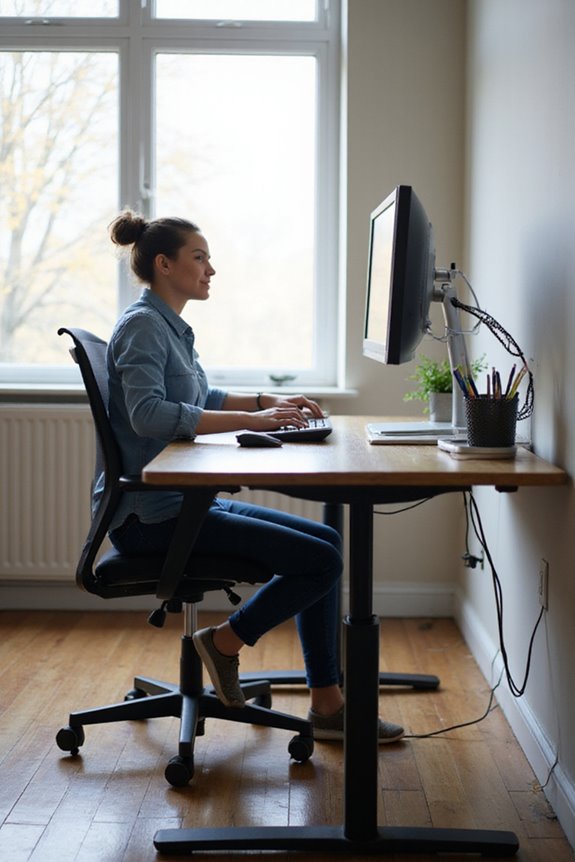
When I think about creating an ergonomic workspace, the position of my desk plays an essential role in my overall comfort and productivity. First, I guarantee there’s adequate desk spacing, allowing my legs to fit comfortably beneath the desk without strain. I adjust the desk height so my elbows rest at a 90-degree angle when typing, reducing wrist and shoulder tension. To minimize workspace clutter, I keep frequently used items within easy reach, preventing unnecessary stretching. I also consider the desk’s location in relation to lighting, avoiding glare from windows or overhead lights. Additionally, using an adjustable height desk can significantly enhance comfort during long hours of desk work. By following these guidelines, I can create a workspace that supports my health and enhances my efficiency.

LED-Backlit - In-Plane Switching (IPS) Technology - Full HD 1920 x 1080 Resolution - 60 Hz Refresh Rate - Blue Light Filter - ComfortView Plus Technology

Monitor Stand with 2 Drawers: Dual monitor stand includes a large 10.9 inch practical slide-out drawer, providing a private space for storing your desktop items, making the space neater and more spacious.

Broad Compatibility: Besign LS03 Laptop Stand is compatible with all laptops from 10''-15.6'', such as Air 13, Pro 13 / 15 / 2018 / 2017 / 2016, Lenovo ThinkPad, Dell, HP, ASUS, Chromebook, and other notebooks.
Setting Up Monitors for Comfort
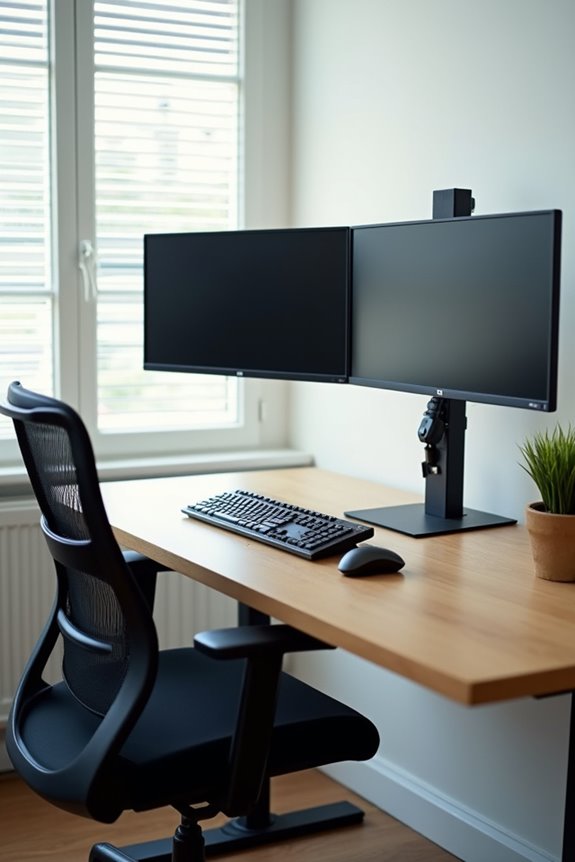
Creating an ergonomic workspace doesn’t stop with the desk; monitor setup is equally important for my comfort and productivity.
- Monitor Height: I position the top of my monitor screen at or slightly below eye level to prevent neck strain.
- Screen Tilt: Tilting the monitor back 10° to 20° helps reduce glare and promotes a natural neck posture.
- Viewing Zone: I guarantee the screen angle allows for a comfortable viewing zone of about 30 degrees, minimizing excessive head movement.
- Distance: I maintain a distance of 50-65 cm (20-26 inches) from my shoulders to the monitor to avoid eye strain. Additionally, using an adjustable stand can further enhance ergonomic setup by allowing for flexible height and angle adjustments.
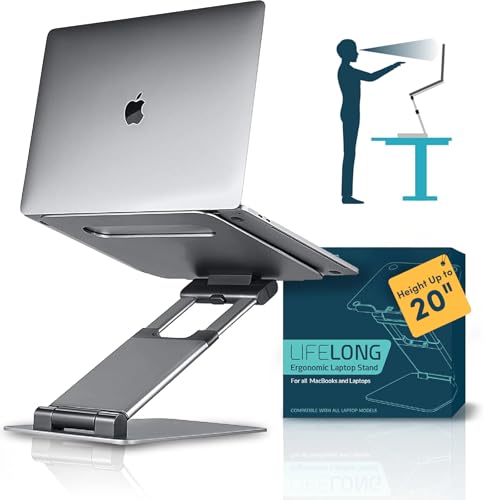
UPRYZE ERGONOMIC STAND! If You are having issues with your back then you are at the right place, Our ERGONOMIC LAPTOP STAND is compatible and will work perfectly for ALL MACBOOK AND LAPTOPS of all sizes from 10 inch tablets to 17 inch laptops including MacBook Air, Pro, 10, 13, 15, 15.6 and 17 inch laptops. You can USE IT WHILE SITTING OR STANDING. With it's cool design, it even keeps your laptop cool so that it DOESN'T OVERHEAT.

Create Instant Active Standing: Sitting too long is dangerous for your health, Tounee’s ergonomic laptop stand provides on-demand standing throughout the long work day, says goodbye to long hours of sitting, helps to relieve muscle tension, reduces stress, and increases productivity.

★【Sturdy & Protective】 The laptop computer stand is made of premium 5mm high density aluminum alloy which is quite sturdy supports up to 26 lbs (12kg) weight on top with large rubber pads on the top surface to hold your laptop stable in place and maximum protect your device from any scratches and sliding.No part of your notebook actually touches the aluminum surface.
Configuring Your Keyboard and Mouse
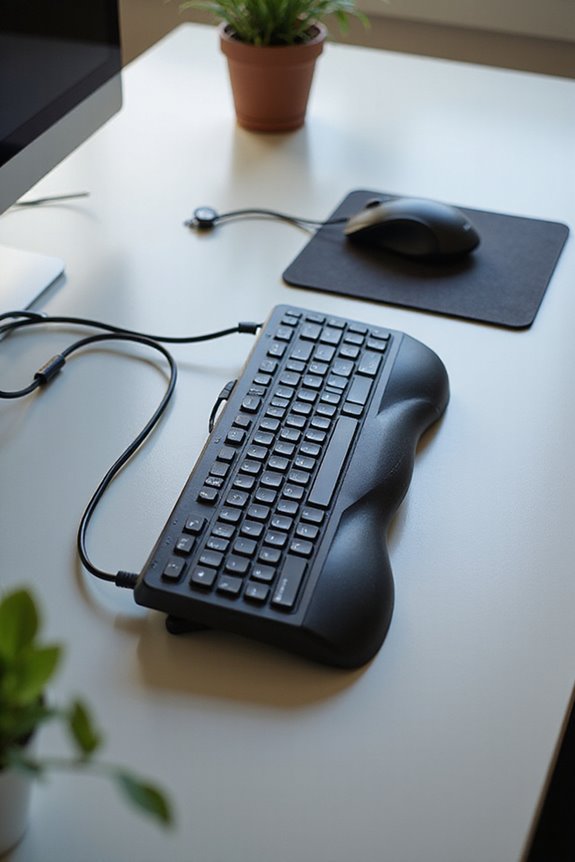
Configuring your keyboard and mouse is essential for an ergonomic workstation, as it directly impacts comfort and efficiency. Start by positioning the keyboard directly in front of you at elbow height, ensuring your shoulders are relaxed and elbows are close to your body. Your wrists should remain straight and in line with your forearms, with a slight downward tilt of about 10–15 degrees for added comfort. For the mouse, place it adjacent to the keyboard at the same height, keeping it close to reduce shoulder strain. It’s important to maintain a neutral wrist position while using the mouse. Experiment with different keyboard heights and mouse angles to find the setup that feels most comfortable and supportive for your body. Consider using ergonomic wrist rests to further enhance your typing comfort and reduce strain during long hours of work.
Ensuring Proper Lighting in Your Workspace
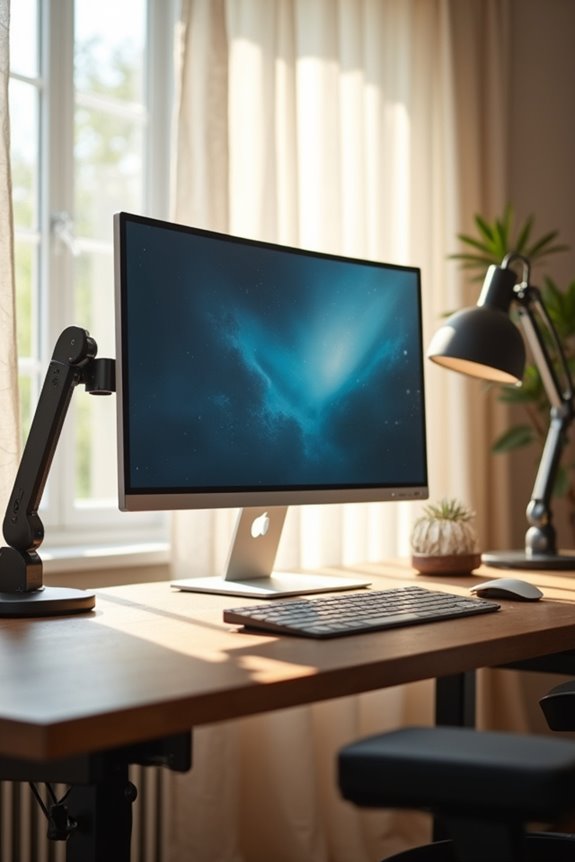
To enhance comfort and productivity, it’s crucial to contemplate the lighting in your workspace. First, aim for a lighting intensity of 300-500 lux, which helps reduce eye strain during general office work. Incorporate a color temperature between 3000-4000 Kelvin for a balanced light experience.
Next, position your screens to avoid direct sunlight and bright overhead lights, minimizing glare. Using anti-glare screens can also help reduce reflections on your monitor.
Additionally, guarantee even illumination by utilizing reflective surfaces and consider task-specific lighting for detailed work. Don’t forget to adjust your lighting based on the tasks at hand, and keep your fixtures clean and well-maintained for peak performance. Investing in eye-caring technology can significantly enhance your lighting experience and reduce eye fatigue.
Taking Breaks and Stretching Regularly
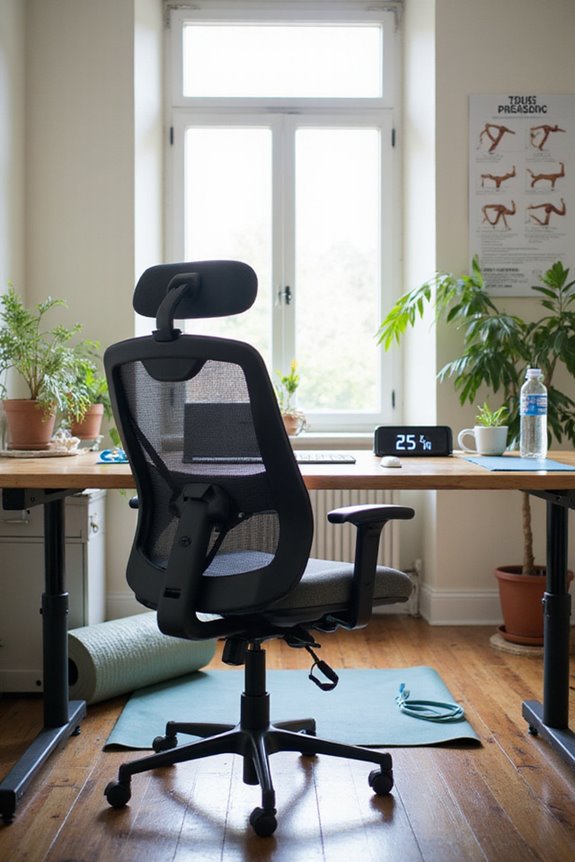
Taking regular breaks and incorporating stretching into your work routine is essential for maintaining both physical and mental well-being. I recommend a break frequency of 5-10 minutes for every hour you spend at your workstation. During these breaks, stand up and walk around to reduce fatigue and boost productivity.
Incorporating stretch types that focus on the neck, shoulders, and lower back can notably alleviate muscle tension and improve flexibility. It’s beneficial to integrate these stretches into your daily routine, ideally after prolonged sitting. Regular stretching not only enhances your range of motion but also promotes better posture, helping prevent musculoskeletal issues. Prioritizing breaks and stretches will ultimately lead to a healthier work experience.
Evaluating and Improving Your Workstation Setup
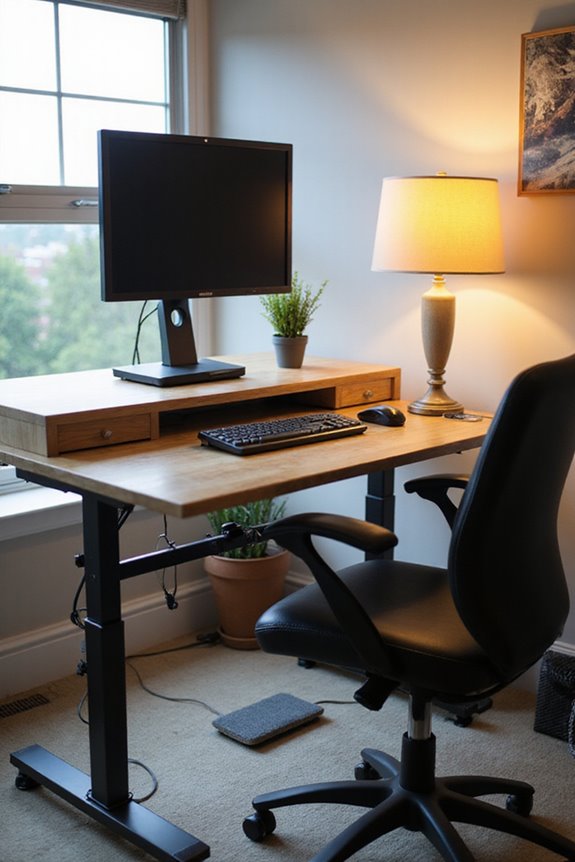
Evaluating your workstation setup is a key step in promoting comfort and productivity while working. Start with a posture assessment; verify your head, neck, and back are aligned, with feet flat on the floor. Adjust your chair for ideal support, keeping your hips back and backrest height conducive to lower back support.
Next, position your monitor an arm’s length away, slightly below eye level, to prevent strain. Confirm your keyboard and mouse are at the same level, close by, and require minimal force to operate.
Finally, focus on workspace organization. Keep frequently used items within reach to reduce clutter and improve efficiency. A well-organized workspace is essential for maintaining focus and productivity throughout your day.
Frequently Asked Questions
How Can I Reduce Glare on My Computer Screen?
To reduce glare on my computer screen, I use screen filters and make lighting adjustments. I position my monitor away from direct light and adjust brightness for better visibility, making my workspace more comfortable.
What Are the Signs of Poor Ergonomic Setup?
I’ve noticed that poor posture often leads to discomfort symptoms like neck pain, wrist strain, and fatigue. If you’re experiencing any of these issues, it’s likely time to reassess your workspace setup.
Can an Ergonomic Setup Improve Productivity?
I’ve noticed an incredible productivity boost since I embraced ergonomic benefits. With less discomfort and better focus, I can work longer and more efficiently. It’s amazing how a few adjustments can transform my work experience!
How Often Should I Reassess My Ergonomic Workstation?
Frequent assessments foster fantastic workstation adjustments. I recommend reassessing your setup annually, or whenever discomfort arises or changes occur. Staying proactive guarantees your workspace remains ergonomically sound and enhances your overall comfort and productivity.
Are There Specific Tools for Ergonomic Assessments?
I’ve found several ergonomic tools and assessment methods invaluable for evaluating workstations. Tools like REBA and RULA help pinpoint risks, ensuring I maintain a comfortable and healthy workspace. Regular assessments keep everything in check.